What is included in a Kilimanjaro group climb?
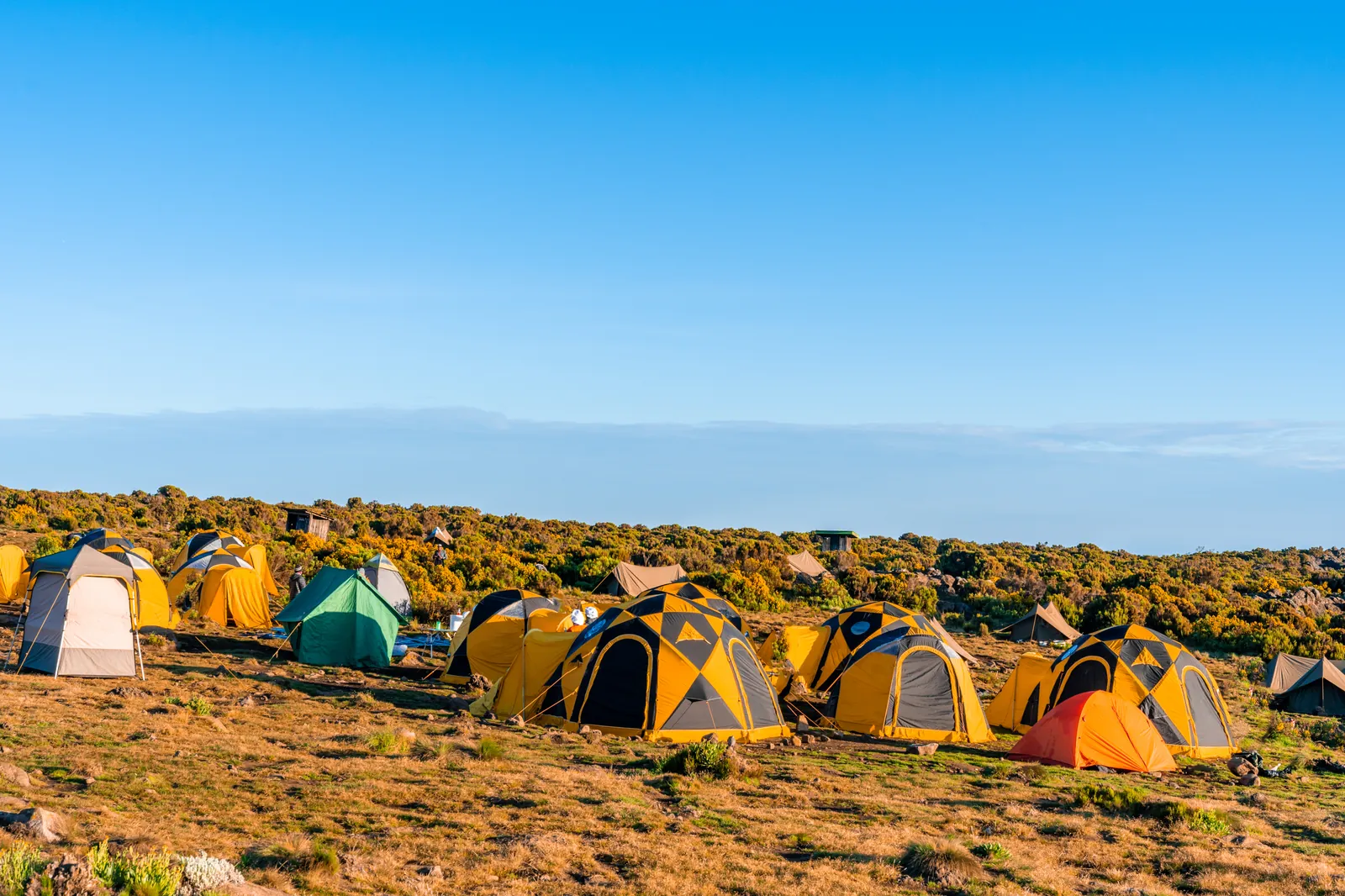
Most group climbs include park entry, camping equipment, meals, a licensed mountain guide, assistant guides, porters and transfers to and from the mountain gate. The exact list depends on the operator and package. Read the inclusions and exclusions carefully before you book.
- Usually included: park fees, camping, tents, meals and the guide and porter team. Many operators also carry emergency oxygen, so ask whether yours does.
- Often extra: international flights, travel insurance, visa fees, crew tips, sleeping bag rental and personal gear.
- Check before paying: airport transfers, hotel nights before and after the climb, and whether the summit night is covered.
Ask for the inclusions in writing. A written list protects you if the package details are later unclear. It also helps you weigh up two group departures on equal terms.
The park sets rules on how much porters may carry. Porters carry most of the group equipment, so your daypack holds only what you need on the day. Ask the operator how many porters are assigned per climber, because this affects load weights and comfort.
How much does a Kilimanjaro group climb cost?
Group climbs cost less per person than private treks, because the crew and many fixed costs are shared. The price changes with route length, season and group size. This guide does not quote a price, because each operator sets its own. Check the current price on the group departures page or ask the operator for a written quote before you decide.
Park fees are set by TANAPA, Tanzania National Parks. The fee depends on the number of days on the mountain and the category of visitor, and it is charged per person, so it does not fall when you join a group. On the TANAPA tariff page for 1 July 2026 to 30 June 2027, checked in November 2026, a non-resident adult pays TZS 178,850 per 24 hours in the park, plus TZS 127,750 per night for public camping (or TZS 153,300 per night for Marangu huts) and a rescue fee of TZS 51,100 per climb. Your operator confirms the current figure and the amount in US dollars for your trip. Ask for it in writing before you pay.
When you weigh up two group departures, look at the total cost, not only the headline price. Add the flights, insurance, visa, tips and any extra nights to see the real figure. A typical group tip budget for crew is set by the operator and paid at the end of the climb, so ask for that figure too.
Which route should I choose for a group climb?
The route decides how many days you spend on the mountain, how many climbers you meet on the trail, and how well your body adjusts to altitude. Machame and Lemosho are the most common group choices. Rongai is quieter and approaches from the north.
Common Kilimanjaro routes for group climbs
| Route | Typical length | Main feature | Best for |
|---|
| Machame | 6 to 7 days | Scenic and steep, with many camps; popular with groups | Climbers who want strong views on a balanced schedule |
| Lemosho | 7 to 8 days | Longer approach, quieter trails and a gradual ascent | Climbers who want more acclimatisation time |
| Rongai | 6 to 7 days | Drier northern side with fewer crowds | Climbers who prefer a gentler, quieter path |
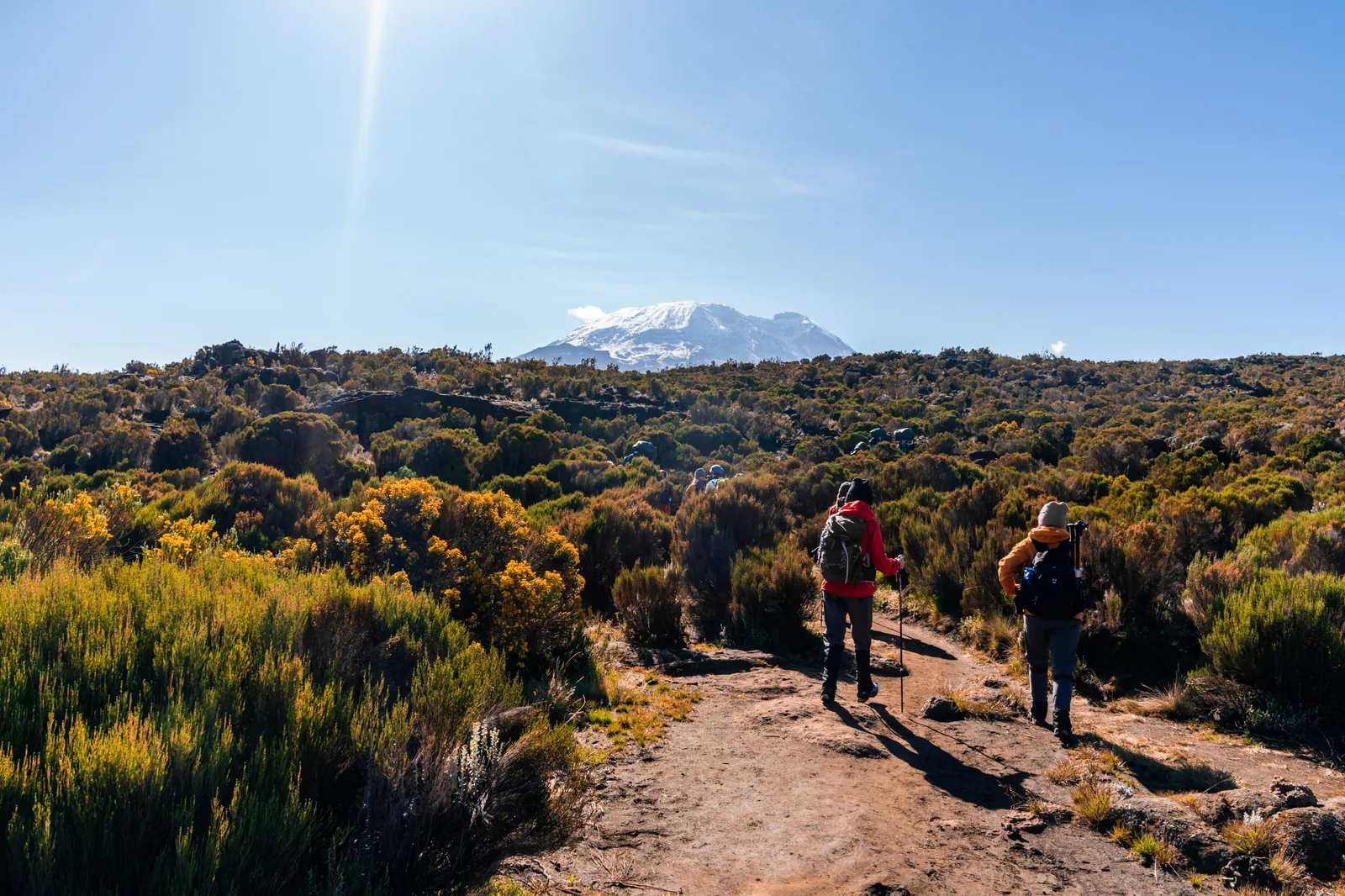
On the Lemosho route, the first days cross forest and moorland before joining the southern circuit. Machame climbers hike through rainforest on day one, then camp at higher altitude each night. Ask your operator which route suits your fitness and time. Longer routes add acclimatisation days, which often helps with altitude.
Summit night is the hardest part of most routes. Climbers usually leave high camp around midnight and walk for about six to eight hours to reach Uhuru Peak at sunrise. Rongai and Lemosho often add a day at a middle camp, which gives the body more time to adjust before that push.
Is a group climb better than a private expedition?
A group climb is better for travellers who want a fixed schedule and a lower cost. A private expedition is better for families, people with special needs, or climbers who want a custom pace. Both use licensed guides and follow the same park rules.
- Group climb: fixed dates, shared cost, a social trek, and less flexibility on pace.
- Private expedition: your own dates, your own pace, and a higher cost per person.
- Either option: the same mountain, the same park rules and the same guide standards.
A group pace is set for the slowest climber in the team, so a group suits people who are close in fitness. If you are much faster or slower than the people around you, a private trek usually feels better.
When is the best time to join a Kilimanjaro group climb?
The best months are generally January to early March and June to October. These are the drier periods, when cloud and rain are less frequent on the trails. The long rains in April and May, and the short rains in November and December, bring wet paths and lower visibility.
Dry weather is never certain, and mountain weather changes quickly. Summit nights can drop well below freezing, so expect cold conditions at high camps even in the best months. With wind chill, it can feel colder than minus 10 degrees Celsius near the summit. Choose a date that gives you enough training time and fits your leave.
Peak months such as July to August and the Christmas period fill quickly. Book early for those dates, and expect higher group prices during them.
How fit do I need to be for a group climb?
You need regular cardio exercise and the ability to walk for five to eight hours a day with a daypack. Start training at least three months before departure. Hill walking, stair climbing and long walks with a loaded pack all help.
Altitude affects people differently, regardless of fitness. Ask your doctor about altitude sickness before you go, and tell your operator about any medical conditions. The operator's guide checks climbers each day and may slow the pace or turn a climber back if symptoms get worse. The NHS guide to altitude sickness explains the symptoms, and your national travel health service, such as TravelHealthPro in the UK, can advise on medication and pre-trip checks.
A common guideline is to raise your sleeping altitude by no more than about 300 to 500 metres per day above 3,000 metres. This is why the longer routes with extra acclimatisation days tend to give a higher success rate for first-time climbers.
How do I join a group departure safely?
Start by checking the operator's licence and company documents. SafariLists checks tour-operator licences and company papers before an operator is listed as SafariLists Verified. You can read how this works on the trust and safety page. You can also send one request through SafariLists to up to 3 operators you choose and decide between their written replies.
- Choose a route and a departure date from the group departures page.
- Check the inclusions, exclusions and the TANAPA park fee in writing.
- Confirm the operator's licence and the guide team's experience.
- Get a clear booking confirmation and payment terms before you transfer any money.
- Arrange the mandatory inbound travel insurance, your own travel insurance, vaccinations and an eVisa through the official Tanzania Immigration portal.
Tanzania requires an entry visa for most visitors from the United States. Apply through the official Tanzania Immigration eVisa system, and do not pay anyone who offers to process it for you. Since 1 October 2026, visitors also need the Tanzanian government's inbound travel insurance, according to the GOV.UK entry requirements page. Check the current entry requirements before you book, because rules can change.
On the mainland, tour operators are licensed by the Tourism Agents Licensing Authority (TALA) under the Ministry of Natural Resources and Tourism. Membership of a trade association, such as the Tanzania Association of Tour Operators, is separate from the licence. Ask for the licence number. Licence checks take a few minutes and protect you from unlicensed trips.
What should I pack for a Kilimanjaro group climb?
Pack layers, because temperatures drop sharply after dark and at high camps. Bring waterproof outer gear, warm sleeping clothes and sturdy trekking boots that you have already broken in. Your operator will send a full kit list after booking.
Keep your daypack light. Carry water, snacks, a rain layer and your camera on the trail, and leave heavy items with the porters.
- Waterproof jacket and trousers
- Thermal base layers and a warm fleece
- Warm hat, gloves and a buff
- Broken-in trekking boots and gaiters
- A 30 to 40 litre daypack and a head torch
- Refillable water bottles or a hydration bladder
- A sleeping bag rated to around minus 10 to minus 15 degrees Celsius
Test your boots on at least three long walks before the trip. Blisters are one of the most common reasons climbers struggle in the first two days.
How do I start a Kilimanjaro group climb request?
Send your preferred dates, fitness level and route through SafariLists. The SafariLists team checks the request first, then sends it to up to 3 SafariLists Verified operators you choose. There is no obligation, you pay the operator directly, never into a personal account, and SafariLists adds no mark-up.
If you are not sure which route fits, try our Find my safari quiz. You can also use the free Tanzania safari planner to see how a climb fits with other parts of your trip. For a combined trip, read about safari and Zanzibar beach trips to plan rest days. Browse the group departures page and the Kilimanjaro group climb page for current fixed dates.
Frequently asked questions
Can a solo traveller join a Kilimanjaro group climb?
Yes. Solo travellers are common on group treks. You share the trip with other climbers and one guide team. You pay your own share, and you do not need a partner to book a place.
How many people are in a typical Kilimanjaro group?
Group size varies by operator and departure. Groups are usually small, and the guide-to-climber ratio is set to keep everyone safe. Ask your operator for the exact group size before you book.
Are park fees included in the group price?
Most group packages include the TANAPA park fee, but this varies. Check the inclusions list and ask the operator to confirm the current tariff in writing before you pay.
Which Kilimanjaro route is easiest for a group?
Rongai and Lemosho are often chosen for a gentler pace, because they allow more acclimatisation days. Machame is popular and scenic, but it has steeper sections. Your fitness and available days decide the right choice.
Do I need a visa to climb Kilimanjaro?
Most visitors from the United States need a Tanzania visa. Apply through the official Tanzania Immigration eVisa portal. Check current requirements on the official site before you travel, as rules can change.
Can I combine a Kilimanjaro group climb with a safari?
Yes. Many travellers climb Kilimanjaro and then join a safari in Serengeti or Ngorongoro. Plan rest days between the climb and the safari, and ask your operator to build the combined trip.
A group climb is the simplest way to start: the bottom line
A Kilimanjaro group climb gives you fixed dates, shared costs and a licensed guide team from the operator, which suits many first-time climbers.
- Pick a route that matches your fitness and the days you have available.
- Check inclusions, the TANAPA park fee and the operator's licence before you pay.
- Train for at least three months and apply for your visa early.